


What Happens When an ISO Standard Is Updated?
Whenever an ISO standard is revised, it’s completely natural to pause and ask what that means for you.
- "Will my qualification still count?"
- "Will I need to retrain straight away?"
- "Will clients or employers still recognise my credentials?"
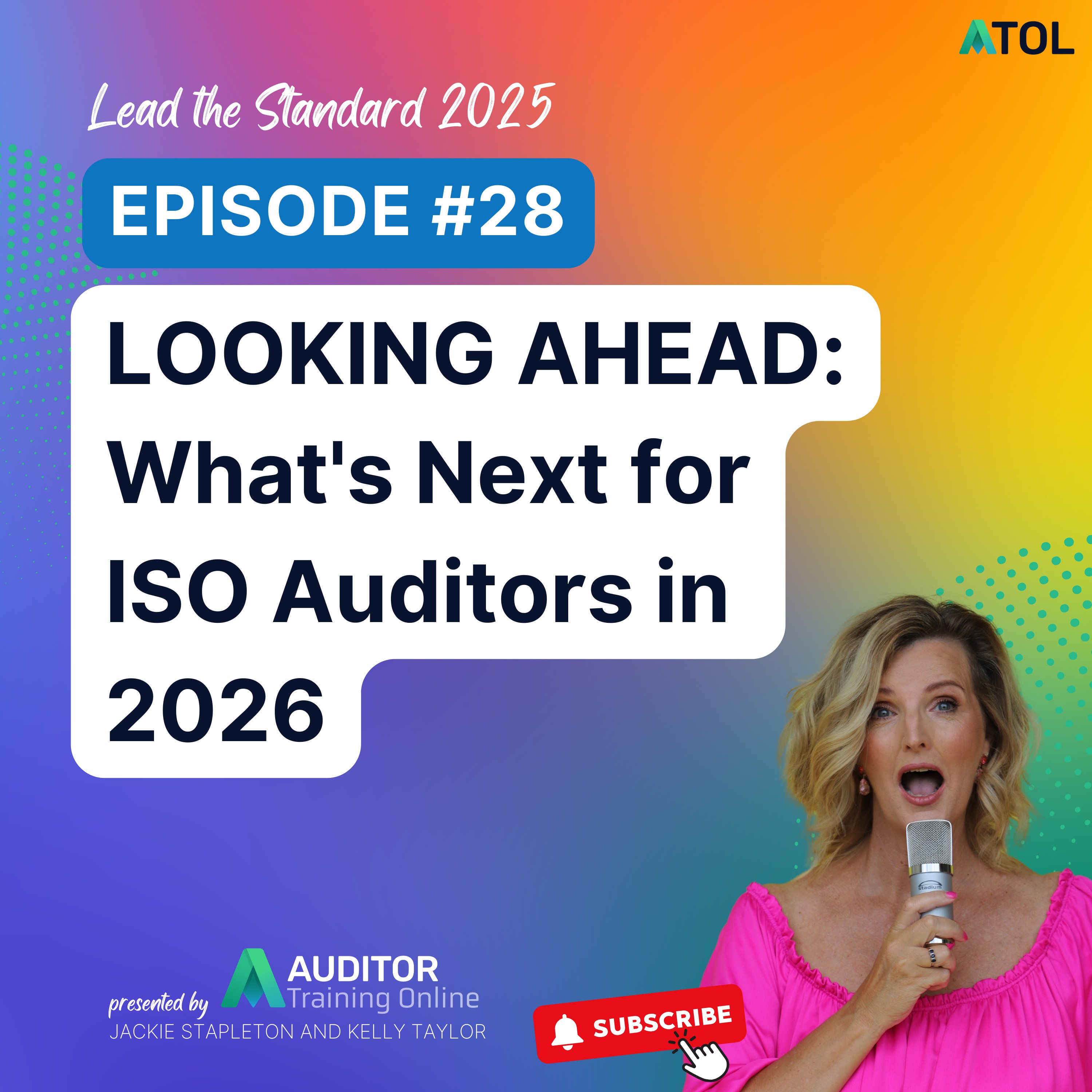
With several major ISO standards scheduled for revision in 2026, including ISO 9001 (Quality Management Systems), ISO 14001 (Environmental Management Systems), and ISO 19011 (Guidelines for Auditing Management Systems), we’re hearing these questions more often from both current and prospective students. And the concern is understandable. Professional qualifications matter, and no one wants to feel caught out by a standards change.
The reassuring reality is that an ISO standards update is not a sudden reset. It’s a carefully managed process designed to support continuity, not disrupt it.
How ISO Standards Are Revised
To understand what an update really means, it helps to first understand how ISO standards are revised.
Each revision builds on the existing standard, refining requirements and clarifying expectations rather than discarding what already works.
Every ISO standards revision follows a structured, internationally governed process. Changes are developed over several years through technical committees, draft releases, and industry consultation. This ensures updates are practical, evidence-based, and globally consistent.
So when a revised ISO standard is finally published, it doesn’t replace the existing version overnight. Instead, it signals the start of a formal ISO transition period, giving organizations, auditors, and training providers time to adapt in a measured and sensible way.
This approach is consistent across ISO management system standards, whether you work in quality, environmental management, safety, or any other ISO space.
Standard Revisions Due for Publication in 2026
With that revision process in mind, it becomes clearer how upcoming changes fit into the bigger picture.
Several widely used ISO standards are currently progressing through the ISO revision cycle, with updates expected in 2026. At the time of writing, this includes ISO 19011 Guidelines for Auditing Management Systems, ISO 14001 Environmental Management Systems, and ISO 9001 Quality Management Systems.
While exact publication dates can shift, the direction of travel is now clear enough for organizations and professionals to start planning. These timelines also allow training providers like ATOL to prepare appropriate transition support, including updated materials and bridging pathways, well before any deadlines apply.

ISO Transition Periods and Qualification Validity
One of the most important and most misunderstood aspects of an ISO standards revision is the transition period.
When a revised ISO standard is released, the previous version remains valid for a defined ISO transition period, typically up to three years. During this time, organizations continue operating against the current revision while planning and implementing the changes at a pace that makes sense for them.
For auditors and practitioners, this means your existing qualification does not suddenly lose its value. Certification bodies continue to recognise audits to the current standard, and organizations still need qualified professionals to support them through the transition.
This applies not just to training, but to ISO certification itself. Organizations and auditors continue working to the current revision while the transition is underway.
In short, an ISO revision does not make you instantly unqualified.
Bridging Courses and ISO Standards Transitions
As standards evolve, the expectation is not that experienced professionals start again from the beginning.
In many cases, a revision also introduces changes in language or emphasis. Understanding updated ISO language, how requirements are worded, interpreted, and applied, is a key part of staying confident during a transition.
This is where ISO bridging courses come in. Rather than repeating a full programme, a bridging course focuses specifically on what has changed, helping you understand new or revised requirements and how they affect audits and management systems in practice.
ATOL is preparing bridging pathways for ISO 9001 Quality Management Systems, ISO 14001 Environmental Management Systems, and ISO 19011 Guidelines for Auditing Management Systems, aligned to the 2026 revision cycle. These courses are designed to respect the experience you already have, while ensuring you remain confident and current as standards evolve.
Why Waiting for a New ISO Standard Can Limit Opportunity
At this point, some people consider “waiting it out” until a new ISO standard is released before enrolling. On the surface, that can seem sensible, but in practice, it often has the opposite effect.
Current ISO standards remain valid throughout the transition period, and organizations don’t pause audits or improvement activities while revisions are underway. In fact, periods of change often increase demand for qualified auditors and specialists, particularly across quality, environmental, and safety management systems.
Holding a current qualification allows you to build experience, support transition activity, and move smoothly into a bridging course when the new revision is released, rather than sitting on the sidelines.

Understanding ISO Standards Revisions: The Big Picture
Stepping back, it’s worth remembering that ISO standards revisions are not designed to catch people out. They are planned evolutions, introduced gradually and supported by transition periods that protect both organizations and professionals.
Your qualification doesn’t suddenly disappear. Bridging pathways exist for a reason. And engaging early, rather than waiting, often opens up more opportunities, not fewer.
At ATOL, our role is to guide you through each stage of the ISO standards transition with clarity, practicality, and respect for the experience you already bring.
Monitoring Future ISO Standards Revisions
Alongside ISO 9001, ISO 14001, and ISO 19011, other standards such as ISO 22000 (Food Safety Management Systems) and ISO 45001 (Occupational Health and Safety Management Systems) are also being monitored for future revision.
Even when changes aren’t immediate, early awareness helps professionals make better decisions about training, skills development, and long-term career direction. Standards don’t evolve in isolation, and understanding the broader landscape is part of staying relevant.
Stay Updated on ISO Standards Revisions and Bridging Courses
If you’d like to stay informed about upcoming ISO revisions, transition timelines, and bridging courses as they become available, you can register your interest here.